How to Host a Darts Tournament in Calgary (Without Losing Your Mind)
A practical, Calgary-specific guide to planning, running, and promoting a darts event that players actually want to attend.
Introduction
If you are curious about darts in calgary, hosting a tournament is one of the fastest ways to turn a few casual throws into a real community event. The tricky part is not the darts. It is the planning: format, timing, rules, space, and keeping the night fun even when competition kicks in.
Right now, more people are looking for low barrier, social sports they can do after work, between kids’ activities, or on a weekend afternoon. Darts fits that rhythm in a way many sports do not. You can run it in a pub, a community hall, or a private room, and you can welcome beginners without watering down the experience for league players.
This article walks you through a simple tournament plan that works in Calgary. You will learn how to pick a format, set expectations, manage equipment and space, promote locally, and avoid the classic problems that derail an otherwise great night.
TL;DR: Hosting a Calgary Darts Tournament, in Plain English
- You are balancing competition, pace of play, and a space that was not designed as a sports venue first.
- A well-run event brings repeat customers to pubs, creates a home base for local players, and gives beginners a friendly on ramp.
- People often assume you can “just run brackets,” forget about match timing, or skip clear rules because “everyone knows darts.”
- Think of it as event hosting first, darts second: flow, communication, and fairness make the night.
- Next steps: choose a format that matches your turnout, lock in a venue setup, publish simple rules, promote to the right circles, and assign a small crew of helpers.
What “darts in calgary” Looks Like When You Host a Tournament
At the ground level, darts in calgary is a mix of casual pub players, league members who care about standards, and curious newcomers who just want to learn without feeling out of place. Hosting a tournament means creating a clear structure where all three groups can show up, pay in, play multiple matches, and leave knowing when the next event is.
In practice, that includes choosing a game type (often 501), deciding how players advance (round robin, double elimination, or a simple bracket), and setting up a venue so the throwing area is safe and consistent. The goal is not perfection. The goal is a night that runs on time and feels fair.
Why Hosting “darts in calgary” Tournaments Matters
A good tournament does more than crown a winner. It gives local players a reason to practice, it gives venues a dependable event night, and it makes darts visible to people who have only ever tossed a few casual rounds.
For beginners, tournaments create a clear “next step” after their first fun night out. For league players, it is a chance to sharpen competitive reps. For pubs and local businesses, it is a community event that tends to bring groups, repeat visits, and a friendly buzz that does not depend on a big screen game.
Step 1: Pick a Format That Matches Your Crowd (And Your Clock)
Tournament format is the lever that controls everything: time, fairness, and how many games each person gets. Think of it like choosing the right snow tire tread before a Chinook swings the weather again. The choice changes how the whole night feels.
Here is a quick comparison to help you choose:
| Format | Best for | Pros | Watch-outs |
|---|---|---|---|
| Single elimination | Small turnout, short nights | Fast, simple | People may travel in and play once |
| Double elimination | Medium turnout | More play time, fairer | Can run long without tight scheduling |
| Round robin pods + playoffs | Mixed skill levels | Everyone plays multiple matches | Needs more boards and planning |
If you want a “fun but competitive” vibe, round robin pods (groups of 4 or 5) into playoffs usually keeps beginners engaged while still rewarding the strongest players. Takeaway: your format is your schedule, so pick it before you post the event.
Step 2: Get the Venue Setup Right (Boards, Space, and Flow)
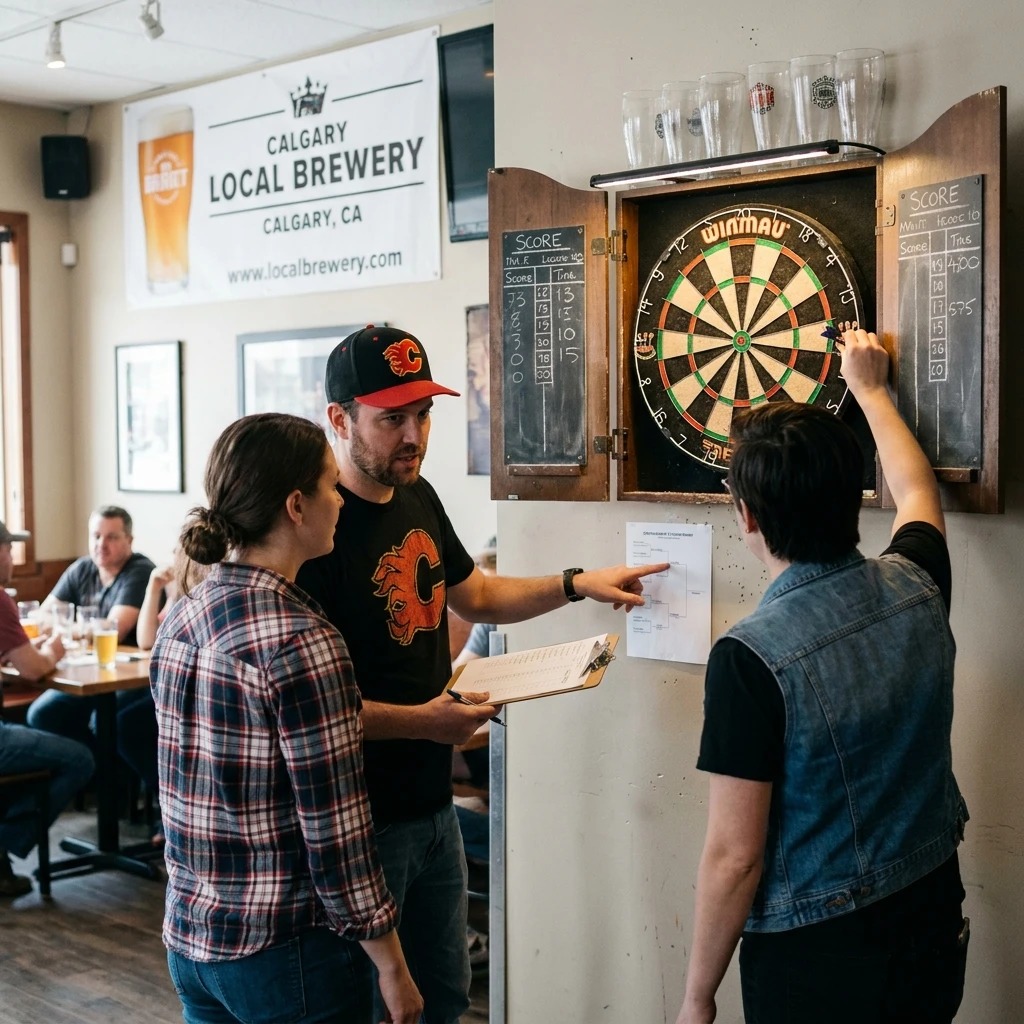
A pub can be a great darts venue, but only if the setup respects the throwing line, the scoring area, and the people moving around. Confirm the number of boards, the spacing between them, and whether you can block off the oche area so servers and players are not crossing paths.
You will also want to standardize what “ready to throw” means, where players stand while waiting, and who is allowed in the throwing lane. In Calgary, many venues are busiest on weekend evenings, so an afternoon start or an early weekday league-style start often runs smoother than prime dinner hours.
Takeaway: a safe, consistent layout prevents the small disruptions that turn a two-hour plan into a four-hour slog.
Step 3: Make Rules Simple, Visible, and Consistent
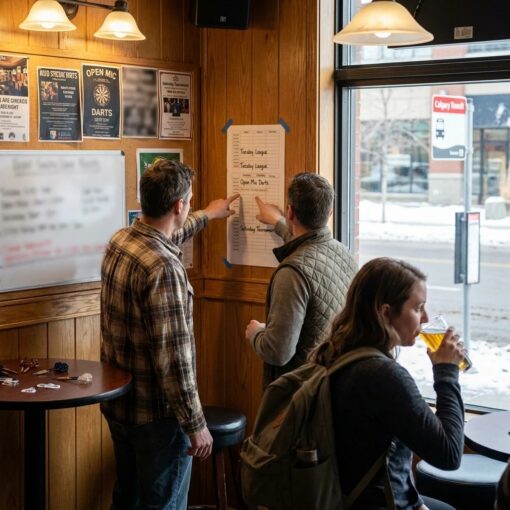
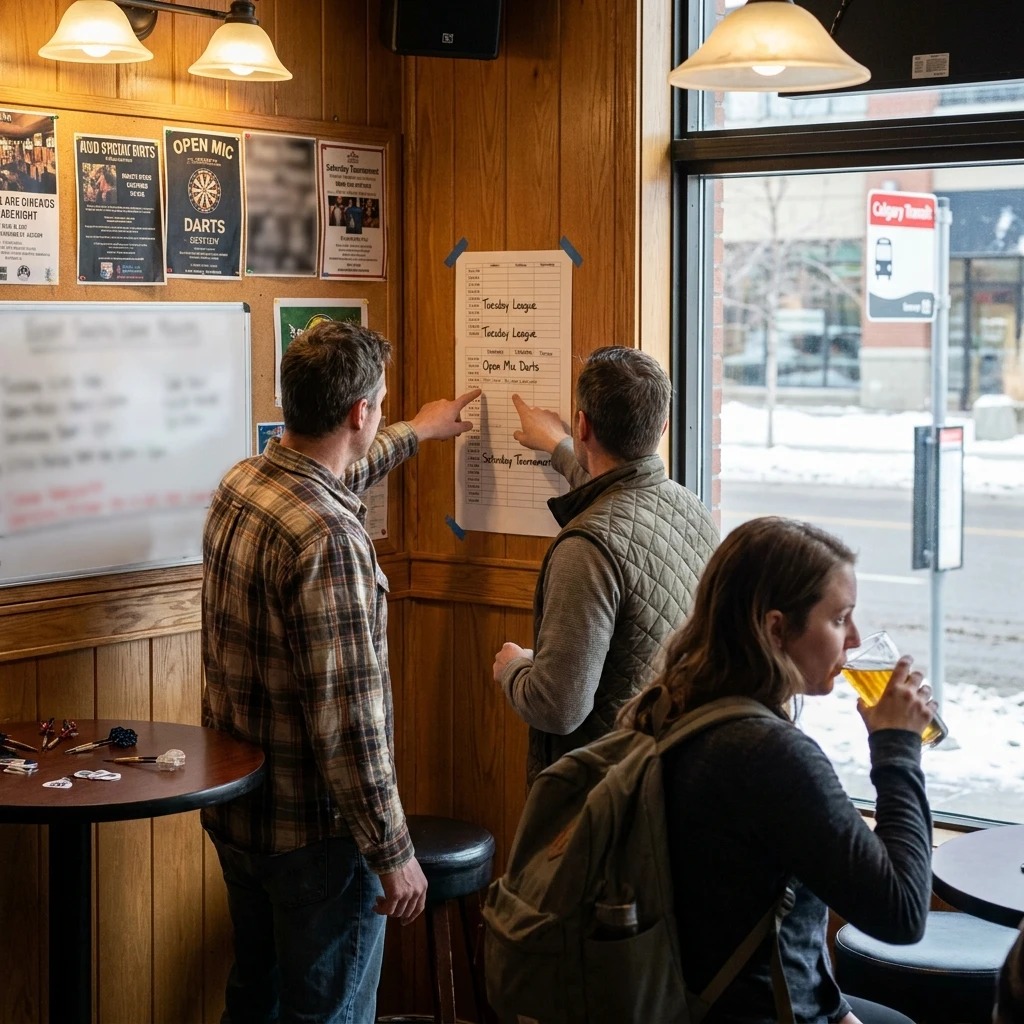
House rules are where tournaments either feel fair or feel improvised. Write a one-page rules sheet and post it where players sign in. Include: game format (example: 501), start and finish rules (double-in, double-out, or straight-out), bull rules, how to handle busts, and what happens if a player is late to a call.
Keep your tone welcoming. A tournament can be competitive without being icy. If you have newer players, assign a floater who can answer “Wait, does that count?” questions without stopping every match.
Takeaway: clear rules prevent debates, and debates are how tournaments lose time.
Step 4: Promote Like a Local, Not Like a Billboard
If you want a strong turnout for darts in calgary events, promotion works best when it feels personal and specific. Post the basics early: date, start time, venue, format, entry fee, payout or prizes, and whether players need to bring their own darts.
Around the middle of planning, build momentum with local touches. Calgary sports fans respond to a simple challenge and a clear time box, especially during Stampede season when everyone’s calendar is already packed. A “Stampede Warm-Up Shootout” theme can work if your rules and timing stay tight.
Also, ask the venue to post it, ask regulars to bring one new player, and share it in local darts circles. Takeaway: people show up when they know what they are walking into.
Step 5: Run the Night With a Small Crew and a Clear System
You do not need a huge staff, but you do need roles. Assign one person to brackets and calls, one to handle disputes and rules questions, and one to float and keep matches moving. If you can only have two people, combine floating with rule support.
Use a simple match call system: call the next match, give a short grace period, then move on. Near the end of the night, have a plan for finals attention. Players like a bit of ceremony, even if the “trophy” is a small plaque that lives behind the bar next to a jar of spare flights that have seen better days.
Takeaway: organization is what makes the event feel professional, even when the vibe stays casual.
How to Apply This: A Simple Tournament Timeline You Can Use
Use this as a ready-to-run process:
- 2 to 4 weeks out: Choose format, confirm boards and space, set entry fee and prize plan, publish rules.
- 2 weeks out: Start promotion, collect early sign-ups if possible, recruit one helper.
- Day of: Arrive early, tape or mark the throwing lines, post rules, set sign-in deadline.
- Start time: Brief welcome, explain format and timing, start round one immediately.
- During play: Call matches clearly, record results right away, keep an eye on pace.
- Wrap-up: Announce winners, thank the venue, share the next event date before people leave.
Frequently Asked Questions
How many dartboards do I need for a tournament?
Enough boards to keep players from waiting too long between matches. As a rough planning idea, more boards mean faster rounds and happier players, especially with round robin pods.
What is the best format for mixed skill levels?
Round robin pods into playoffs usually works well because beginners get multiple games and stronger players still earn their way into finals.
Should players bring their own darts?
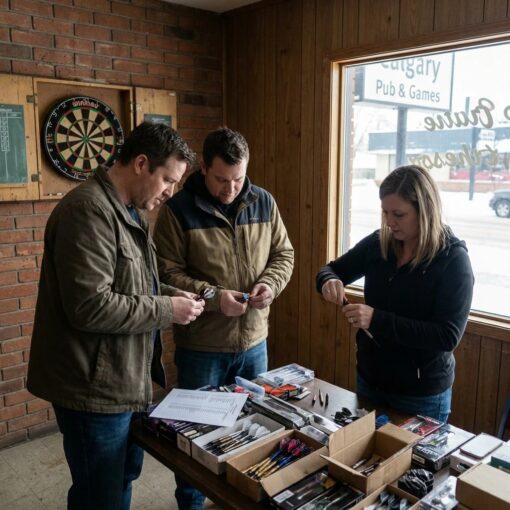
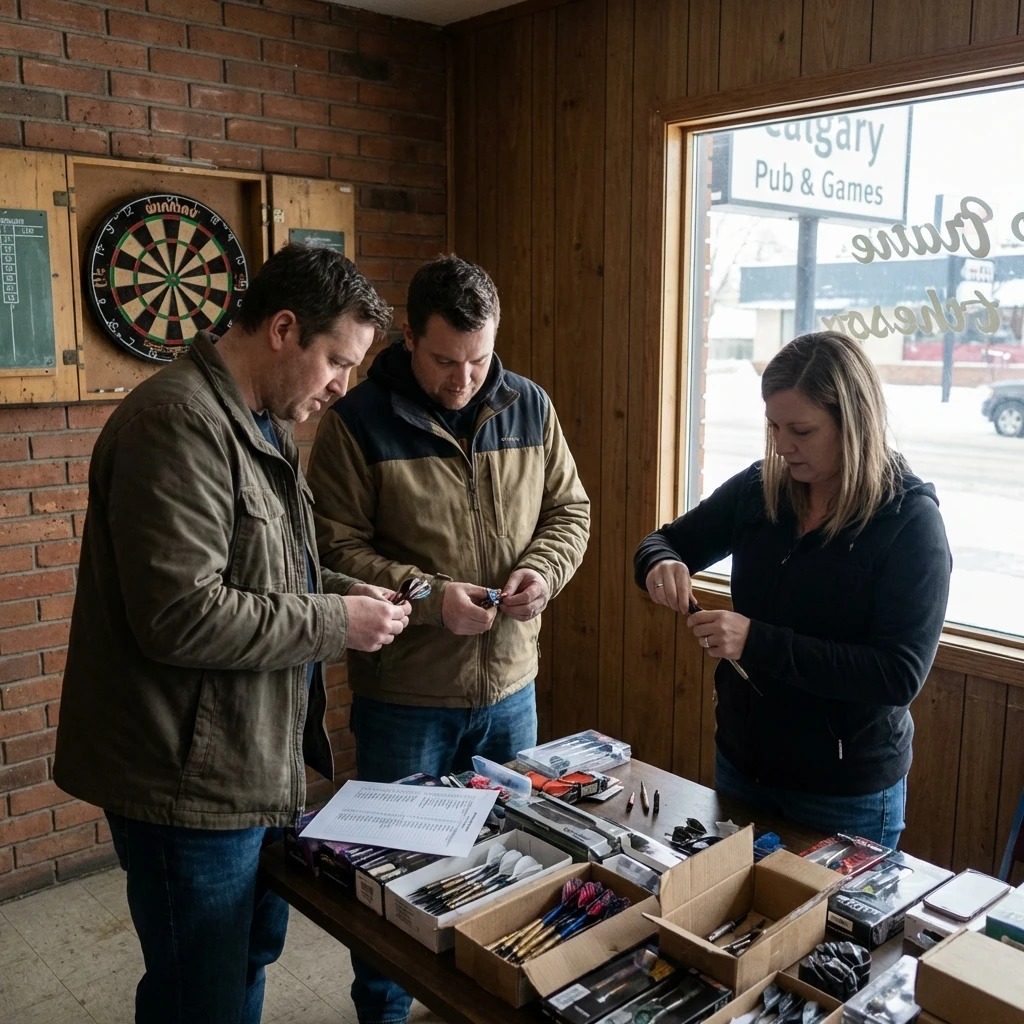
It helps if they do, but having a small set of loaner darts reduces friction for first-timers. If you offer loaners, make it clear how many sets you have.
How do I prevent disputes about scoring?
Post clear rules, assign a rules person, and standardize how scores are called and confirmed. Consistency matters more than complexity.
When is the best time to host in Calgary?
Weeknights can work well for league-style communities, while weekend afternoons often avoid peak pub traffic. Match your start time to the venue’s busiest hours.
Dartboard Key Takeaways (Bullseye Edition)
- A good tournament is mostly event planning: timing, flow, fairness, and communication.
- Choose a format based on turnout and time limits, not just what looks “official.”
- Venue layout and safety keep the night running smoothly.
- Written rules and assigned roles prevent time-wasting debates.
- Local promotion works best when the details are clear and the vibe fits Calgary.
Hosting darts in calgary tournaments does not require fancy gear or a massive budget. It requires a format that fits your space, a simple system for match flow, and a welcoming tone that makes new players want to return. Put clarity first, then add the fun extras after the foundation is solid. Once you run one good event, the next one gets easier because you will have a core group that trusts your setup. That is how a one-off night becomes a real community calendar. If you want momentum, announce the next date before people cash out and head home.
Action: Pick a date, choose your format, and confirm your venue setup this week, then publish the event details.
If you want help connecting with local players and organizers, reach out through the Darts in Calgary contact page.